First, measure how many people come back
Without a number it’s hard to tell whether there is a problem, or whether your changes are working. One monthly figure is enough.
- Take all new customers from one month. For example, everyone whose first visit was in September.
- Set a return window: how many weeks until a customer of your service should come back. You know it best, it’s the usual interval between visits in your business.
- Count how many of those new customers booked a second visit within that window.
- Divide the second number by the first and multiply by 100. That’s your return rate as a percentage.
The number itself matters less than how it moves month to month and how it differs between stylists, technicians or clinicians. If one person’s customers come back noticeably more often, watch what they do differently at the end of the visit.
Don’t benchmark yourself against “industry norms” found online. Services, prices and visit intervals vary, so someone else’s figure says little about your business.
Five causes and how to check each one
Each cause comes with a quick check and a change you can make this week.
- Nobody offered the next booking. Check: does the front desk ask “Shall we book your next visit?” at checkout. Change: ask everyone who needs the service again and offer two specific dates.
- They don’t know when to come back. Check: does the stylist or clinician name a time frame for the next visit. Change: at the end of the visit, say when and why in plain words.
- The result didn’t match expectations. Check: do you ask how the visit went. Change: a short question the next day, and if something is wrong, sort it out before they try someone else.
- Rebooking is a hassle. Check: try booking yourself in the evening, by phone and by message, and time how long a reply takes. Change: online booking, or a same-day reply to messages.
- They forgot about you. Check: does every customer record have a next contact date. Change: a reminder when the visit is due, not a blast to everyone.
Price can be a reason too, but it’s better to hear it from the customer than to guess. What to say when someone tells you it’s too expensive is covered in our piece on price objections.
How to hear the reason from the customer
One of the most useful sources is the people who didn’t come back. Message them once, briefly, with no sales pitch. Template:
“Hi Emma, you visited us in September for a haircut. We’re trying to get better: what stopped you from coming back? Just reply with a number: 1 didn’t like the result, 2 hard to book, 3 forgot, 4 price, 5 something else.”
Don’t add a discount or offer to this message. Otherwise people may respond to the offer instead of the question. If someone describes a bad experience, treat it like a negative review. Thank them, own the problem and offer a step you can actually deliver.
A follow-up plan after the first visit
Set this sequence up once and it runs for every new customer.
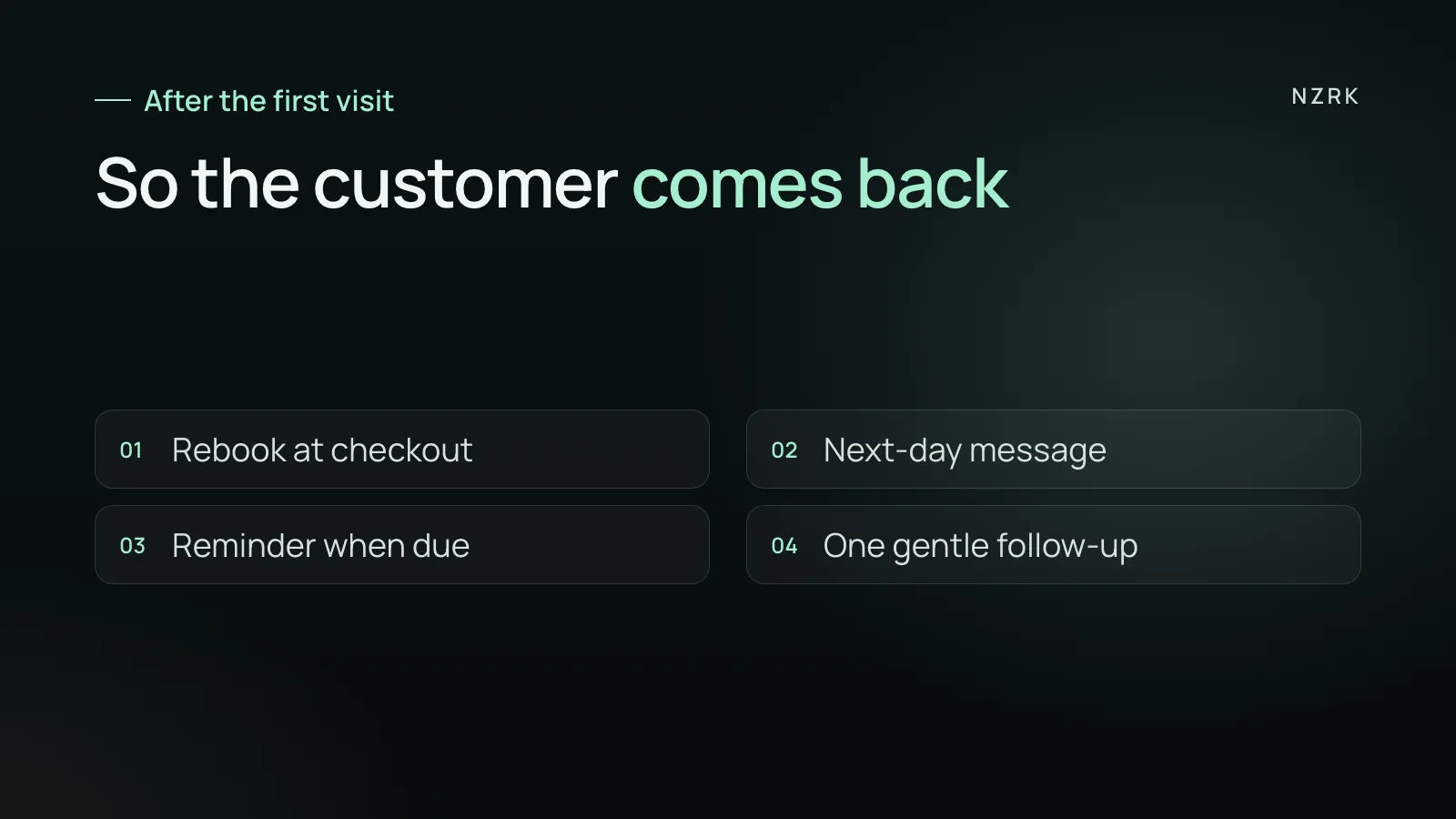
- At checkout. Offer the next booking on a specific date. If they’re not ready, note in their record when to get in touch.
- The next day. A short thank-you with one question: “Thanks for coming in yesterday. How are you finding the result? If anything isn’t right, just reply and we’ll sort it out.”
- When it’s due. A reminder on the day the service is due again: “Hi Emma, it’s been six weeks since your haircut. Shall we book you in? We have time on Thursday and Saturday.” Only name days that really have free slots.
- A week with no reply. One gentle follow-up, then stop. Frequent reminders can easily feel like pressure.
It’s best to message only people who agreed to hear from you. Rules for marketing messages depend on the country, so check the ones that apply to you before any bulk send. Clinics should leave diagnoses and treatment details out of messages: other people may see the text on a phone screen.
When they want to come back but nobody replies
Sometimes the customer does want to come back. They message you on Instagram or call, and nobody replies until evening. Then they may book wherever answered first. To check this for your business, take the free AI audit: AI shows where requests get lost and what to fix first. How to set and keep a reply standard is in our piece on first response speed.
Example: what the customers who didn’t return are worth
What to do this week
- Work out last month’s return rate.
- Add the next-booking question to what the front desk says at checkout.
- Message ten customers who didn’t come back and collect their answers.
- Set up a next-day message after every first visit.
What is a normal return rate?
There is no single norm: it depends on the service, the price and the visit interval. It’s more useful to compare yourself with yourself, month against month and team member against team member.
Should I offer a discount to win a customer back?
Not as a first step. Find out the reason first. If they forgot or found booking hard, a discount won’t fix that.
How many reminders are too many?
We suggest no more than two reminders about the next visit once it’s due. If there’s no reply, note it in the customer record and stop reminding. You can send one separate question about the reason (template above) only to people who agreed to hear from you.
What if the customer says they didn’t like the result?
Thank them, own the problem and offer a step you can actually deliver. Don’t argue by message, offer a phone call instead.